5 Dental Myths That Are Quietly Destroying Your Teeth
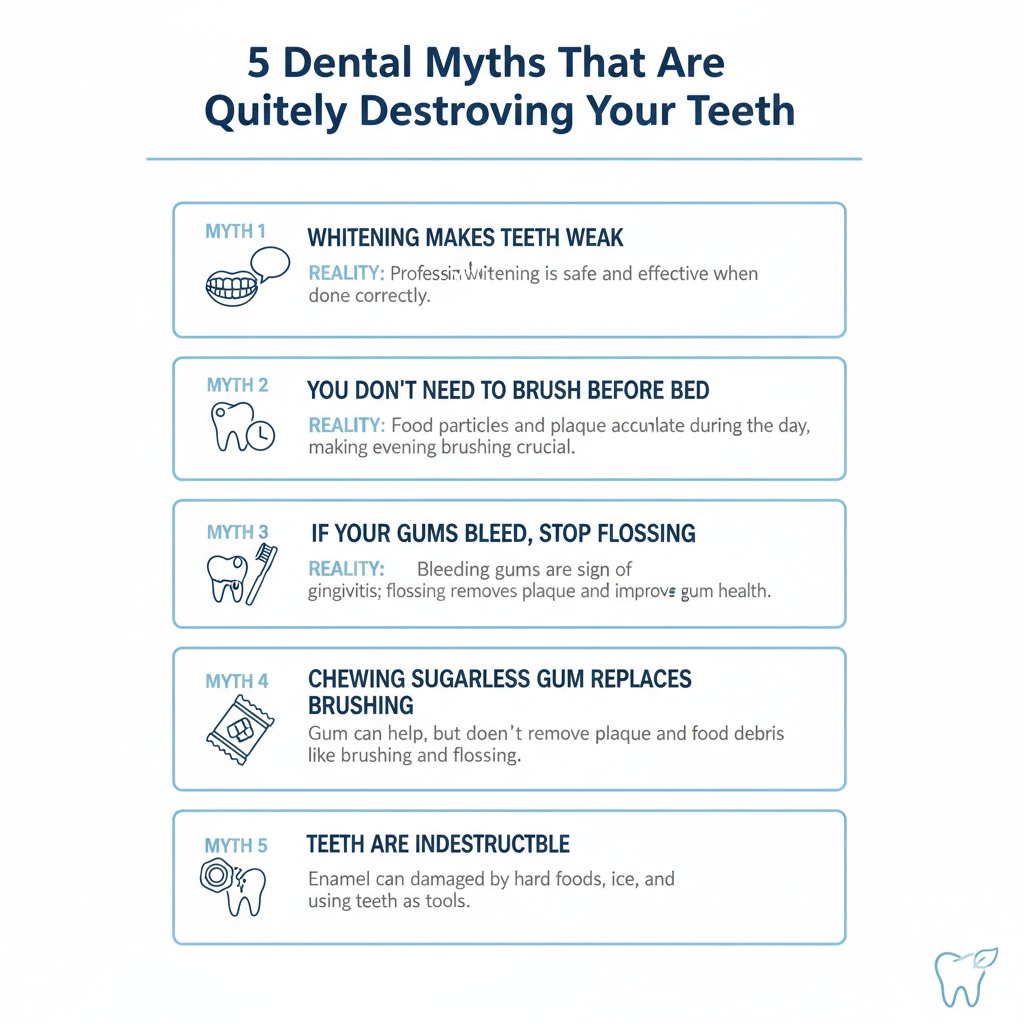
When it comes to dental care, misinformation is everywhere. Well-meaning advice from friends, social media tips, and outdated beliefs can slowly damage your teeth and gums without you realizing it. At Charlesworth Dental Clinic, we often see the long-term effects of common dental myths—and many of them are surprisingly easy to avoid once you know the truth. Let’s take a closer look at five dental myths that may be quietly harming your smile. Myth #1: If Your Teeth Don’t Hurt, They’re Healthy One of the most damaging myths is that pain is the first sign of a dental problem. In reality, many serious issues—such as cavities, gum disease, and even infections—can develop without any pain at all, especially in the early stages. Tooth decay often begins silently, and gum disease can progress for years before discomfort appears. By the time pain shows up, treatment may be more complex and costly. This is why regular dental checkups and cleanings are essential, even when everything feels fine. The truth: Prevention and early detection save teeth. Myth #2: Brushing Harder Cleans Better Scrubbing your teeth aggressively might feel productive, but it can actually do more harm than good. Brushing too hard can wear down enamel, irritate the gums, and even cause gum recession—exposing sensitive tooth roots. The goal of brushing is to remove plaque gently and consistently, not to “scrape” your teeth clean. A soft-bristled toothbrush and light pressure are far more effective and much safer for your enamel and gums. The truth: Gentle brushing protects your teeth better than force. Myth #3: Sugar Is the Only Cause of Cavities Sugar does play a role in tooth decay, but it’s not the only culprit. Cavities are caused by acids produced when bacteria break down carbohydrates—including bread, pasta, crackers, and even fruit. Sticky foods and frequent snacking can be especially harmful because they give bacteria more time to produce acid. Acidic drinks like soda, sports drinks, and citrus juices can also weaken enamel, even if they’re sugar-free. The truth: It’s not just sugar—it’s how often and how long acids attack your teeth. Myth #4: Flossing Isn’t Necessary If You Brush Well This myth quietly destroys more smiles than almost any other. Toothbrushes simply can’t reach the tight spaces between teeth where plaque and food particles hide. Skipping flossing allows bacteria to build up in these areas, increasing the risk of cavities and gum disease. Many patients are surprised to learn that gum disease often starts between the teeth, where it’s least visible. Daily flossing removes plaque your toothbrush can’t reach and helps keep gums healthy and strong. The truth: Brushing and flossing work best as a team. Myth #5: Bleeding Gums Are Normal Bleeding gums are often dismissed as harmless, especially during brushing or flossing. In reality, bleeding is usually a sign of inflammation—most commonly early gum disease (gingivitis). Healthy gums don’t bleed. Ignoring this symptom allows gum disease to progress, which can eventually lead to bone loss and tooth loss. The good news is that early-stage gum disease is reversible with proper care and professional cleanings. The truth: Bleeding gums are a warning sign—not something to ignore. Why These Myths Matter Dental myths are dangerous because they delay care. They make people think harmful habits are helpful, or that problems will be obvious when they’re not. Over time, these misunderstandings can lead to avoidable pain, expensive treatments, and permanent damage. At Charlesworth Dental Clinic, our goal is to help patients make informed decisions about their oral health. Education is one of the most powerful tools we have to protect your smile. How to Protect Your Teeth the Right Way Brush twice a day with a soft-bristled toothbrush Floss daily to clean between teeth Limit frequent snacking and acidic drinks Watch for signs like bleeding gums or sensitivity Schedule regular dental exams and cleanings The Bottom Line Your teeth don’t need harsh treatment or guesswork—they need consistent, evidence-based care. By letting go of common dental myths and focusing on proven habits, you can protect your smile for years to come. If you have questions about your oral health or think a dental myth may be affecting your habits, contact the team at Charlesworth Dental Clinic is here to help. A healthy smile starts with the right information—and we’re happy to provide it.